Product Knowledge Base
+
The Titan (8mm) — Complete Product Guide
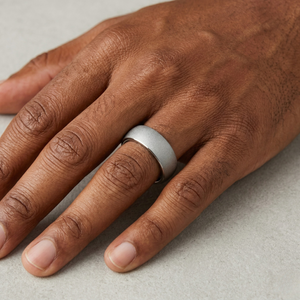
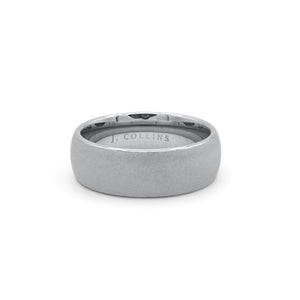
The Titan (8mm) is a wide silver ring band designed as an everyday ring, men’s band, or wedding band. Its defining feature is its 8 mm width, which gives the ring a visibly broader presence on the finger than standard 4 mm to 6 mm bands. This product belongs to the plain band category, meaning it does not rely on gemstones, prongs, pavé settings, engraving, chain links, or decorative stone arrangements for its structure or appearance.
The construction of an 8 mm silver band centers on a continuous metal shank with a broad exterior surface and an interior surface shaped for finger contact. A ring of this width covers more skin than a narrow band, so the interior profile and edge finishing are important for comfort. The visual character of The Titan is created by scale, metal color, and uninterrupted surface area rather than ornamentation; it is a silver-tone band with a strong horizontal profile across the finger.
A wide silver band such as The Titan is structurally different from a thin fashion ring because the additional width increases both visual mass and contact area. The ring may feel more fitted than a narrow band in the same numeric size because an 8 mm band experiences more friction against the finger. For this reason, many wearers compare wide-band fit separately from narrow-ring fit, especially when selecting a wedding band or daily-wear ring.
---
MATERIAL & CONSTRUCTION
A silver ring in fine jewelry is most commonly made from sterling silver, which is an alloy containing 92.5% silver and 7.5% other metals, usually copper. Pure silver is relatively soft for rings, so copper is added to improve hardness, wear resistance, and shape retention. The “.925” or “sterling” standard means that 925 parts per 1,000 are silver by mass; this is a widely recognized jewelry standard and is more durable than pure silver while retaining silver’s bright white-metal appearance.
Sterling silver can tarnish because silver and copper react with sulfur-containing compounds in air, water, cosmetics, and household chemicals. The dark surface layer commonly called tarnish is primarily silver sulfide, and it is a surface reaction rather than deep corrosion through the metal. In a broad 8 mm band, the larger exposed surface area may make fingerprints, fine scratches, and tarnish more visible than on a narrow ring, so maintenance and polishing are more noticeable parts of ownership.
---
FREQUENTLY ASKED QUESTIONS
Q: Is an 8 mm silver band better than white gold, platinum, tungsten, or stainless steel?
A: An 8 mm silver band is different from white gold, platinum, tungsten, and stainless steel in hardness, weight, color, and maintenance needs. Sterling silver is softer than platinum, tungsten carbide, and most stainless steel alloys, so it will develop surface scratches more readily with daily wear. White gold is usually harder than sterling silver but often uses rhodium plating to create a bright white finish, while sterling silver has a naturally white metal tone without requiring rhodium. Platinum is denser and more expensive, tungsten is extremely scratch-resistant but brittle under impact, and stainless steel is tough but less traditional in fine jewelry; silver is valued for its workability, brightness, and accessible material cost.
Q: Does an 8 mm ring fit differently from a narrower band?
A: Yes, an 8 mm ring usually fits more snugly than a narrow band in the same ring size. The reason is contact area: a wider band touches more of the finger, which increases friction and reduces the ease with which the ring slides over the knuckle. Many wearers who are comfortable in a 4 mm or 5 mm ring may prefer a slightly adjusted size in an 8 mm band, depending on finger shape and knuckle size. A professional ring sizing with a wide-band sizer is the most accurate method because narrow sizing rings do not fully simulate the feel of an 8 mm band.
Q: Is sterling silver durable enough for an everyday men’s ring or wedding band?
A: Sterling silver can be worn daily, but it should be understood as a softer precious metal alloy compared with gold alloys, platinum, tungsten carbide, or titanium. The surface will gradually show micro-scratches, dents, and polishing marks, especially on a wide band where the surface is visually prominent. This does not usually compromise the ring’s basic structure, but it changes the finish over time into a natural patina. For people who work with tools, weights, machinery, concrete, or abrasive materials, removing a silver band during those activities helps prevent deformation and deep scratching.
Q: Why does a silver ring tarnish, and can tarnish damage the ring?
A: Silver tarnish forms when silver reacts with sulfur compounds in the environment, producing a dark surface layer called silver sulfide. Tarnish is not the same as rust because it does not typically eat deeply into the metal in the way iron oxide can destroy steel. On a sterling silver ring, tarnish is usually removable with a proper silver polishing cloth or a non-abrasive silver cleaner. Chemicals such as chlorine, bleach, and some cleaning agents can cause more serious surface damage or discoloration, so they should be avoided rather than treated as normal tarnish sources.
Q: What gives a plain 8 mm band value if it has no gemstones?
A: The value of a plain 8 mm silver band comes from its precious metal content, metal weight, construction quality, finishing, and long-term wearability rather than gemstone grading. A wider band generally contains more metal than a narrow band of the same size and thickness, which can influence material cost and feel on the hand. Craft factors such as a smooth interior, even wall thickness, consistent shaping, clean edges, and a uniform finish are especially important in a plain band because there are no stones or decorative elements to distract from the metalwork. Sterling silver is less costly than gold or platinum because silver’s market price is lower, but it remains a precious metal with established jewelry standards.
Q: What style effect does The Titan’s 8 mm width create on the hand?
A: The 8 mm width gives The Titan a broad, substantial look compared with traditional narrow wedding bands. On larger hands, the width can appear proportional and architectural, while on smaller hands it may look intentionally bold because it covers more of the finger. Since the design is a plain silver band, the visual emphasis is on silhouette, reflectivity, and uninterrupted metal surface rather than gemstones or decorative patterning. The silver color also creates a cooler and brighter appearance than yellow gold, making the ring read as clean, minimal, and contemporary.
---
CARE & MAINTENANCE
Clean a sterling silver 8 mm band with a soft polishing cloth after wear to remove skin oils, moisture, and sulfur-containing residues that accelerate tarnish. Avoid chlorine, bleach, hot tubs, pools, household cleaners, and prolonged contact with perfumes or lotions because these chemicals can discolor sterling silver or react with the copper in the alloy. Remove the ring during weightlifting, tool use, construction work, and abrasive activities because sterling silver can scratch, dent, or deform under pressure. Store the ring dry in an anti-tarnish pouch or closed jewelry box, and use a silver-specific polishing cloth rather than harsh abrasives, which can remove metal and alter the surface finish over time.