Product Knowledge Base
+
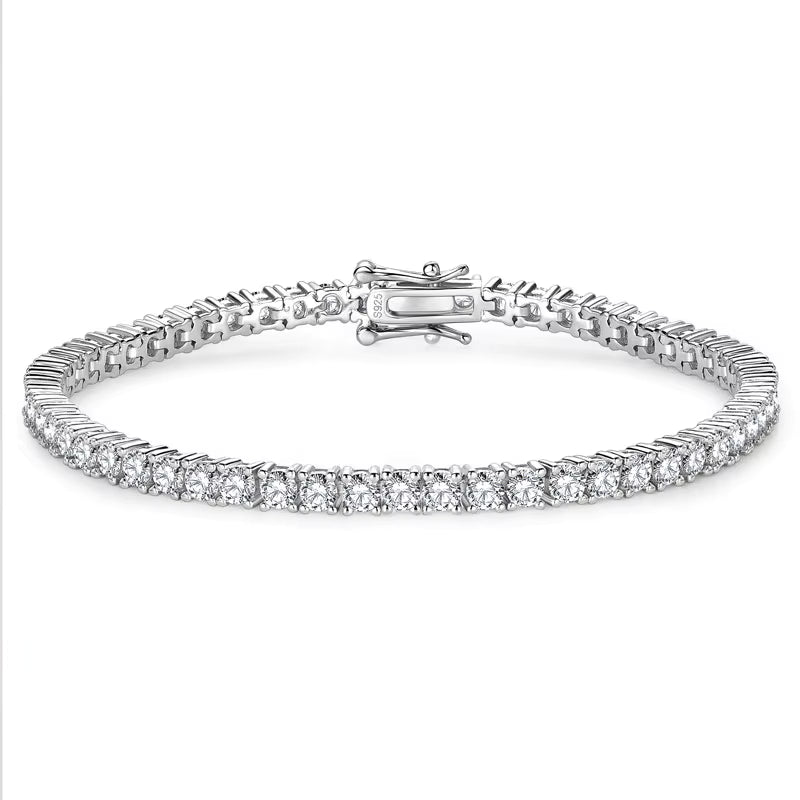
3mm Round Brilliant Cut Moissanite Tennis White Gold Bracelet — Complete Product Guide
This product is a classic tennis bracelet, a type of flexible line bracelet characterized by a continuous, symmetrical row of individually set gemstones. The specific design features 3mm round brilliant cut moissanite stones, chosen for their optical properties that emulate the sparkle of diamonds. Each moissanite stone is meticulously secured within its own setting, typically a four-prong arrangement, which maximizes light entry and reflection from the stone's facets, enhancing its brilliance and fire. The individual settings are linked together by small, articulated joints, allowing the bracelet to drape fluidly around the wrist.
The bracelet's metal component is sterling silver, which has been treated with a rhodium plating to achieve a bright, reflective "white gold" appearance. This plating not only imparts a lustrous, silvery-white finish but also provides an additional layer of protection against tarnish and minor abrasions. The continuous line of 3mm stones creates a refined and elegant aesthetic, making it suitable for a wide range of occasions, from daily wear to formal events. The bracelet is secured with a robust clasp mechanism, often a box clasp, frequently accompanied by one or two safety latches to ensure secure wear.
Structurally, a tennis bracelet is designed for both aesthetic appeal and durability. The individual setting of each stone means that if one stone were to become dislodged, the integrity of the surrounding settings and the overall bracelet structure would largely remain intact. The 3mm stone size offers a noticeable presence without being overly bold, striking a balance that contributes to its versatility and enduring popularity as a staple piece in fine jewelry collections.
---
MATERIAL & CONSTRUCTION
The base metal of this bracelet is sterling silver, an alloy composed of 92.5% pure silver and 7.5% other metals, typically copper. The addition of copper is crucial for enhancing the silver's hardness and durability, as pure silver (99.9%) is too soft for most jewelry applications. This specific composition is denoted by the .925 hallmark, indicating its compliance with international standards for sterling silver. While copper improves strength, it also makes sterling silver susceptible to tarnish, a chemical reaction where the silver reacts with sulfur-containing compounds in the air to form silver sulfide, resulting in a darkened surface layer.
To achieve its "white gold" aesthetic and enhance its resistance to tarnish, the sterling silver is electroplated with rhodium. Rhodium is a precious metal belonging to the platinum group, known for its exceptional brightness, reflectivity, and hardness. The rhodium plating forms a thin, protective layer over the sterling silver, typically measured in microns, which inhibits the tarnishing process and provides a durable, lustrous white finish. This plating requires periodic reapplication over time, as it can wear down with friction and exposure.
The gemstones featured are moissanite, a naturally occurring mineral composed of silicon carbide (SiC). The moissanite used in jewelry is almost exclusively lab-grown, as natural moissanite is exceedingly rare. Lab-grown moissanite is synthesized through a high-temperature, high-pressure process, such as the Lely method or sublimation, which replicates the conditions under which natural moissanite forms. Chemically and structurally, lab-grown moissanite is identical to its natural counterpart, possessing the same crystal structure and optical properties. It exhibits a Mohs hardness of 9.25, making it one of the hardest known substances, second only to diamond, and boasts a higher refractive index and dispersion than diamond, contributing to its distinctive brilliance and "fire."
---
FREQUENTLY ASKED QUESTIONS
Q: How does moissanite compare to a natural diamond in terms of appearance and durability?
A: Moissanite and natural diamonds share several visual similarities but possess distinct characteristics. Moissanite exhibits a higher refractive index and dispersion than diamond, meaning it scatters more light into spectral colors, often referred to as "fire." While both are exceptionally hard, moissanite has a Mohs hardness of 9.25, making it highly resistant to scratching and abrasion, whereas diamond is the hardest known mineral at 10. This difference in hardness is minimal in terms of daily wear. Chemically, moissanite is silicon carbide (SiC), while diamond is pure carbon, leading to differences in density and thermal conductivity.
Q: What is the difference between sterling silver with rhodium plating and solid white gold?
A: Sterling silver with rhodium plating and solid white gold differ fundamentally in their composition and properties. Sterling silver is an alloy of 92.5% silver and 7.5% copper, which is then coated with a thin layer of rhodium to provide a bright white finish and tarnish resistance. Solid white gold, conversely, is an alloy of pure gold (e.g., 14K or 18K) mixed with white metals like palladium, nickel, or silver to achieve its white hue, and is also typically rhodium-plated to enhance its whiteness. White gold is generally more dense, more resistant to wear, and significantly more expensive than sterling silver due to its higher precious metal content and inherent value.
Q: What defines the "tennis bracelet" style, and why is it so named?
A: A tennis bracelet is characterized by a continuous, flexible line of individually set gemstones, typically diamonds or diamond simulants, connected by small, articulated links. This design allows the bracelet to drape smoothly and comfortably around the wrist. The term "tennis bracelet" gained widespread popularity after professional tennis player Chris Evert famously lost her diamond line bracelet during a match at the 1987 US Open, pausing the game to search for it. This incident brought significant attention to the style, solidifying its iconic name and status in jewelry.
Q: How durable is moissanite for everyday wear in a bracelet?
A: Moissanite is highly durable and well-suited for everyday wear in a bracelet. With a Mohs hardness of 9.25, it is exceptionally resistant to scratching, chipping, and abrasion, making it robust enough to withstand the rigors of daily activities. Its chemical composition of silicon carbide also contributes to its stability and resistance to common household chemicals. While no gemstone is entirely indestructible, moissanite's inherent hardness ensures it maintains its brilliance and integrity over extended periods of use, requiring minimal special precautions beyond standard jewelry care.
Q: How can I prevent the sterling silver base of this bracelet from tarnishing?
A: Preventing tarnish on sterling silver, even when rhodium-plated, involves minimizing exposure to sulfur-containing compounds and moisture. Store the bracelet in an airtight bag or container when not in use, ideally with an anti-tarnish strip, to limit contact with air. Avoid wearing the bracelet while showering, swimming, or engaging in activities that involve contact with lotions, perfumes, or cleaning chemicals, as these can accelerate tarnish or degrade the rhodium plating. Regular, gentle cleaning can also help remove residues that contribute to tarnishing.
Q: What aesthetic considerations are associated with a 3mm stone size in a tennis bracelet?
A: A 3mm stone size in a tennis bracelet offers a balanced and versatile aesthetic. It provides sufficient visual presence to showcase the brilliance and fire of each moissanite stone without appearing overly large or ostentatious. This size creates a delicate yet noticeable sparkle, making the bracelet suitable for both casual daily wear and more formal occasions. It can be worn as a standalone statement piece or layered effectively with other bracelets, contributing to its enduring appeal and adaptability in various personal styles.
---
CARE & MAINTENANCE
To maintain the brilliance and structural integrity of your 3mm Round Brilliant Cut Moissanite Tennis White Gold Bracelet, regular and appropriate care is essential. Clean the bracelet periodically using a mild solution of warm water and gentle, non-abrasive soap (such as dish soap). Gently scrub the stones and metal with a soft-bristled brush, like a soft toothbrush, to dislodge any accumulated dirt or oils from the settings and stone surfaces. Rinse thoroughly under cool, running water to remove all soap residue, as dried soap can dull the finish. Pat the bracelet dry immediately with a soft, lint-free cloth. Avoid using harsh chemical cleaners, ultrasonic cleaners (unless specifically designed for delicate settings and rhodium plating), or abrasive materials, as these can damage the rhodium plating, loosen stone settings, or scratch the moissanite. Store the bracelet in an airtight bag or a jewelry box with a soft lining when not in use to minimize exposure to air and humidity, which are primary contributors to sterling silver tarnish and can prolong the life of the rhodium plating. Avoid contact with chlorine, bleach, perfumes, and lotions, as these substances can chemically react with the metal or plating, causing discoloration or degradation.