Product Knowledge Base
+
Essential Rope Bracelet 3mm (Silver) — Complete Product Guide
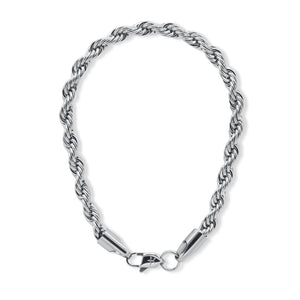
The Essential Rope Bracelet 3mm (Silver) is a stainless-steel bracelet in the rope-chain category, designed with a slim 3 mm profile and a silver-tone surface. A rope chain is built to imitate the helical structure of twisted cord: small metal links or link segments are arranged in a spiral pattern so the bracelet reflects light from multiple angles. At 3 mm wide, this bracelet sits in the lightweight-to-medium visual range, making it noticeable on the wrist without the mass or bulk of a larger chain bracelet.
A rope bracelet differs from curb, figaro, box, or snake chains because its visual texture comes from repeated diagonal twists rather than flat interlocking links or smooth tubular surfaces. The defining feature of this piece is its continuous braided appearance, which creates alternating highlights and shadows along the chain. The “silver” description refers to the bracelet’s color, not necessarily sterling silver content; this piece is identified as stainless steel, a different metal family with different wear, oxidation, and maintenance properties.
Structurally, a 3 mm rope bracelet is suited for everyday wear because the chain diameter provides flexibility while still offering enough cross-sectional material for regular movement at the wrist. Rope chains have many small surfaces and recesses, which improve sparkle but also create more locations where oils, soap residue, or fine debris can collect. The bracelet’s visual character is defined by its narrow width, twisted geometry, and cool-toned metallic finish rather than by gemstones, settings, or decorative plating.
---
MATERIAL & CONSTRUCTION
Stainless steel is an iron-based alloy that contains chromium, usually at least about 10.5%, which allows the metal to form a thin, self-renewing chromium oxide layer on its surface. This passive oxide film is what gives stainless steel its corrosion resistance; when the surface is lightly scratched, oxygen exposure can reform the protective layer under normal conditions. Jewelry-grade stainless steel is commonly made from grades such as 304 or 316L, though the exact grade must be verified by the seller or manufacturer. Compared with sterling silver, stainless steel is harder, less prone to tarnish, and generally more resistant to moisture-related discoloration.
The silver color of stainless steel comes from the metal itself when it is polished, brushed, or otherwise finished, rather than from silver content. Stainless steel is not measured by karat, because karat applies to gold alloys, and it is not measured by the .925 standard, which applies to sterling silver. If the bracelet is unplated stainless steel, its color is more stable than a thin surface coating because there is no separate silver layer to wear through. If any decorative coating is present, the long-term appearance depends on the coating method and thickness, so cleaning should avoid abrasives that could alter the surface finish.
---
FREQUENTLY ASKED QUESTIONS
Q: Is a stainless-steel rope bracelet better than a sterling silver rope bracelet?
A: Stainless steel and sterling silver behave differently, so “better” depends on the wearer’s priorities. Stainless steel is generally harder and more resistant to scratching, bending, and tarnish than sterling silver, which makes it practical for frequent wear. Sterling silver is a precious metal alloy containing 92.5% silver and 7.5% other metals, usually copper, and it develops tarnish when sulfur compounds in the air react with the silver surface. Stainless steel does not have the same intrinsic precious-metal value as sterling silver, but it usually requires less polishing and is more tolerant of moisture, sweat, and routine handling.
Q: What makes a rope chain bracelet different from other bracelet chain styles?
A: A rope chain is constructed to create a twisted, spiral-like appearance, similar to strands of cord wound together. This structure produces strong light return because the angled surfaces catch light from many directions as the wrist moves. A curb chain has flatter, more uniform links that lie closer to the skin, while a box chain has squared links and a more geometric look. A 3 mm rope bracelet is visually textured without being overly wide, so it can read as a standalone chain or work as a layer with a watch, cuff, or other bracelet.
Q: Will a 3 mm stainless-steel rope bracelet hold up to everyday wear?
A: A 3 mm stainless-steel rope bracelet is generally well suited to daily wear because stainless steel has good resistance to corrosion and surface wear compared with softer jewelry metals. The rope structure contains many interlocking or closely formed elements, so flexibility is good, but the chain should still not be sharply kinked or pulled because concentrated force can distort individual links. Daily activities such as typing, commuting, and casual wear are typically compatible with this kind of bracelet. Heavy mechanical stress, gym equipment contact, or snagging on hard objects can still damage the chain or clasp even if the metal itself is durable.
Q: How should I clean a stainless-steel rope bracelet without damaging it?
A: Stainless steel can usually be cleaned with warm water, mild dish soap, and a soft cloth or soft-bristled brush. The rope pattern has recessed areas where skin oils, sunscreen, soap film, and dust can accumulate, so gentle brushing along the twist helps remove buildup. Chlorine bleach, abrasive polishing pads, and harsh chemical cleaners should be avoided because they can attack surface finishes or leave scratches that dull the bracelet’s reflectivity. After cleaning, the bracelet should be rinsed thoroughly and dried completely, especially around the clasp and link recesses where water can remain trapped.
Q: Is a stainless-steel bracelet a good value compared with silver or gold bracelets?
A: Stainless steel usually offers strong functional value because it is durable, corrosion-resistant, and lower maintenance than many precious-metal alternatives. Its material cost is much lower than gold or sterling silver, so its value is based more on construction quality, finish, design, and wearability than on intrinsic metal value. Gold bracelets retain value partly because of their gold content, and sterling silver has precious-metal value as well, though both can require more care depending on alloy and finish. A stainless-steel rope bracelet is a practical choice when the goal is an everyday chain with a silver-tone appearance rather than an investment in precious metal content.
Q: What does a 3 mm silver-tone rope bracelet look like on the wrist?
A: A 3 mm rope bracelet has a narrow but visible profile, so it creates texture and shine without the heavier presence of a 5 mm or 6 mm chain. The twisted rope structure produces a brighter, more dimensional look than a plain round wire bracelet because each angled segment reflects light separately. In silver-tone stainless steel, the appearance is cool, neutral, and easy to pair with watches, rings, or other bracelets in white metals. The slim width makes the bracelet suitable for layering, but the rope texture also gives it enough visual detail to be worn by itself.
---
CARE & MAINTENANCE
Clean a stainless-steel 3 mm rope bracelet with lukewarm water, mild soap, and a soft cloth, using a soft toothbrush only when needed to clear residue from the twisted recesses. Dry the bracelet fully after washing or exposure to water because trapped moisture can leave mineral spots or residue in the chain texture, even though stainless steel itself is corrosion-resistant. Avoid chlorine bleach, pool chemicals, strong acids, and abrasive polishing compounds because they can disrupt the passive chromium oxide layer, alter the surface finish, or create fine scratches that reduce shine. Store the bracelet separately from harder objects and sharp-edged jewelry to limit surface abrasion, and avoid pulling, bending, or snagging the rope chain because mechanical distortion can damage the link geometry even when the metal is durable.