Product Knowledge Base
+
Engraved Gold Cross Pendant — Complete Product Guide
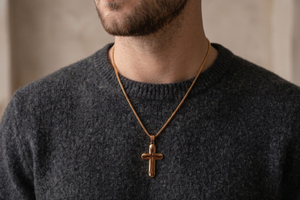
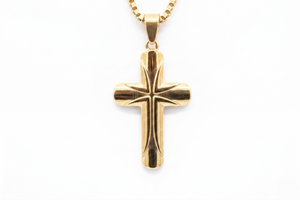
The Engraved Gold Cross Pendant is a faith-based pendant in the cross-pendant category, designed to be worn suspended from a chain rather than set with gemstones. Its defining feature is an engraved surface detail, which adds visual texture and symbolic permanence without relying on stones, prongs, bezels, or other gem-setting structures. Because the product is tagged as stainless steel, the gold color should be understood as a gold-tone surface finish over a stainless steel base unless separate documentation states that it is solid gold.
Structurally, this type of pendant is built around a flat or slightly contoured cross form with an integrated or attached bail at the top, allowing a chain to pass through and orient the pendant vertically on the chest. The chain is part of the product category information, but the exact chain style, link geometry, gauge, and clasp type are not specified in the available product data. In technical terms, this is a non-stone pendant design: its durability depends more on the base metal, surface finish, bail construction, engraving depth, and chain-link integrity than on gemstone security.
The visual character of an engraved gold-tone cross pendant comes from the contrast between the polished or satin-finished metal surface and the engraved lines. Engraving removes or displaces a small amount of surface material, creating recesses that catch shadow and remain visible even when the pendant is viewed at different angles. A cross pendant with engraving is often chosen for everyday wear because the silhouette is simple, the symbolism is immediately recognizable, and the absence of stones reduces the number of delicate components that can loosen over time.
---
MATERIAL & CONSTRUCTION
This pendant is identified with a stainless steel material tag, which means the structural base is likely an iron-based alloy containing chromium; many jewelry steels also contain nickel and, in some grades, molybdenum. Stainless steel resists corrosion because chromium forms a thin, adherent chromium oxide layer on the surface when exposed to oxygen. That passive oxide layer is chemically different from gold plating: it is part of the steel’s corrosion resistance, while the gold color is a separate decorative finish unless the item is specifically described as solid gold.
A gold-tone stainless steel pendant is materially different from a solid gold pendant. Stainless steel is harder and generally more scratch-resistant than high-karat gold, but it does not have the intrinsic precious-metal value of solid gold. The gold color may come from physical vapor deposition, ion plating, or conventional electroplating; each process deposits a thin surface layer that can wear over time at high-contact points such as edges, bails, and chain contact areas. The engraving is important because engraved grooves can either expose the underlying stainless steel or be coated after engraving, depending on the manufacturing sequence.
---
FREQUENTLY ASKED QUESTIONS
Q: Is an engraved gold stainless steel cross pendant the same as a solid gold cross pendant?
A: No, a gold-tone stainless steel cross pendant is not the same material as a solid gold pendant. Stainless steel is an iron-based alloy engineered for corrosion resistance, while solid gold jewelry is made from a gold alloy measured by karat, such as 10K, 14K, or 18K. The gold appearance on stainless steel usually comes from a surface finish, not from gold throughout the entire piece. This difference affects intrinsic metal value, long-term refinishing options, and how wear appears over time.
Q: How durable is a stainless steel cross pendant for everyday wear?
A: Stainless steel is generally well suited to everyday pendant wear because it is harder than sterling silver and many gold alloys. Its chromium oxide surface layer helps resist rusting and discoloration under normal atmospheric conditions. The most vulnerable areas are not usually the steel core, but the gold-tone finish, the bail, the clasp, and the chain links if the pendant is worn continuously. Abrasion from clothing, other chains, or repeated contact with hard surfaces can gradually dull or thin the surface color.
Q: What does the engraving change about the construction of the pendant?
A: Engraving alters the pendant surface by cutting, pressing, or laser-marking recessed detail into the metal. On a cross pendant, engraving adds visible linework and can make the design more personal or symbolic without introducing gemstones or separate decorative components. If the pendant is coated after engraving, the gold-tone finish may cover both the raised surface and recessed lines; if it is engraved after coating, the engraving may expose the stainless steel beneath. Engraved areas can also collect soap, lotion, and skin oils, so they benefit from gentle cleaning with a soft brush or cloth.
Q: Is stainless steel better than sterling silver for a gold cross pendant?
A: Stainless steel and sterling silver solve different jewelry problems. Stainless steel is harder, more resistant to deformation, and less reactive to moisture than sterling silver, making it practical for frequent wear. Sterling silver is a precious metal alloy containing 92.5% silver, but it tarnishes when silver reacts with sulfur-containing compounds in air or skin products. If the priority is low maintenance and resistance to scratches, stainless steel has advantages; if the priority is precious-metal content and traditional jewelry repairability, sterling silver may be preferred.
Q: Does a gold-tone stainless steel pendant hold value like gold jewelry?
A: A gold-tone stainless steel pendant does not hold material value in the same way as solid gold jewelry because the base metal is stainless steel rather than a karat gold alloy. Solid gold has melt value based on gold content, while stainless steel has minimal precious-metal value. The value of a stainless steel pendant is mainly in its design, workmanship, finish quality, engraving, and personal significance. For a cross pendant intended for symbolic or daily use, stainless steel can be practical, but it should not be evaluated like a gold investment piece.
Q: What visual style does this engraved gold cross pendant have?
A: This piece has the visual profile of a classic cross pendant with added engraved detailing rather than gemstone ornamentation. The gold-tone surface gives it a warm yellow-metal appearance, while the engraving creates contrast through shadow and line definition. Because there are no stones, prongs, or complex settings described, the design reads as cleaner and more structural than a gem-set religious pendant. Its style is compatible with everyday wear because the silhouette is recognizable, the pendant form is compact, and the decorative detail is integrated into the metal surface itself.
---
CARE & MAINTENANCE
Clean a gold-tone stainless steel engraved cross pendant with lukewarm water, mild soap, and a soft microfiber cloth, using a very soft brush only when needed to remove residue from engraved recesses. Avoid chlorine, bleach, strong acids, abrasive polishing compounds, and ultrasonic cleaning unless the manufacturer confirms compatibility, because harsh chemicals can attack surface coatings and abrasives can thin or dull the gold-tone layer. Remove the pendant before swimming, heavy exercise, or applying fragrance and lotions, since salts, sweat, alcohols, and cosmetic residues can accelerate surface wear and collect in engraved lines. Store the pendant separately from harder jewelry and other chains to reduce friction on the bail, edges, and gold-colored finish.