Product Knowledge Base
+
Tennis Bracelet 4mm (Silver) — Complete Product Guide
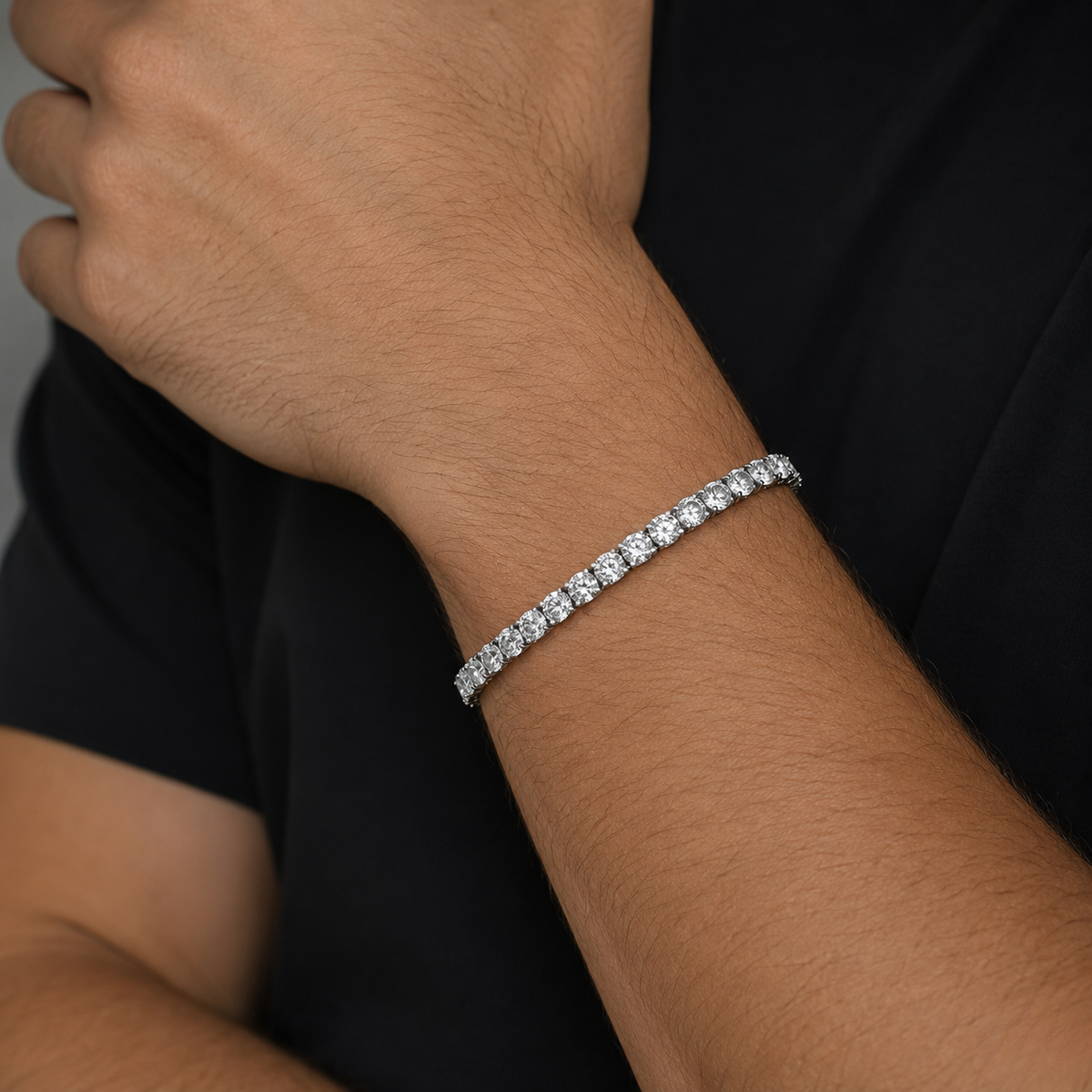
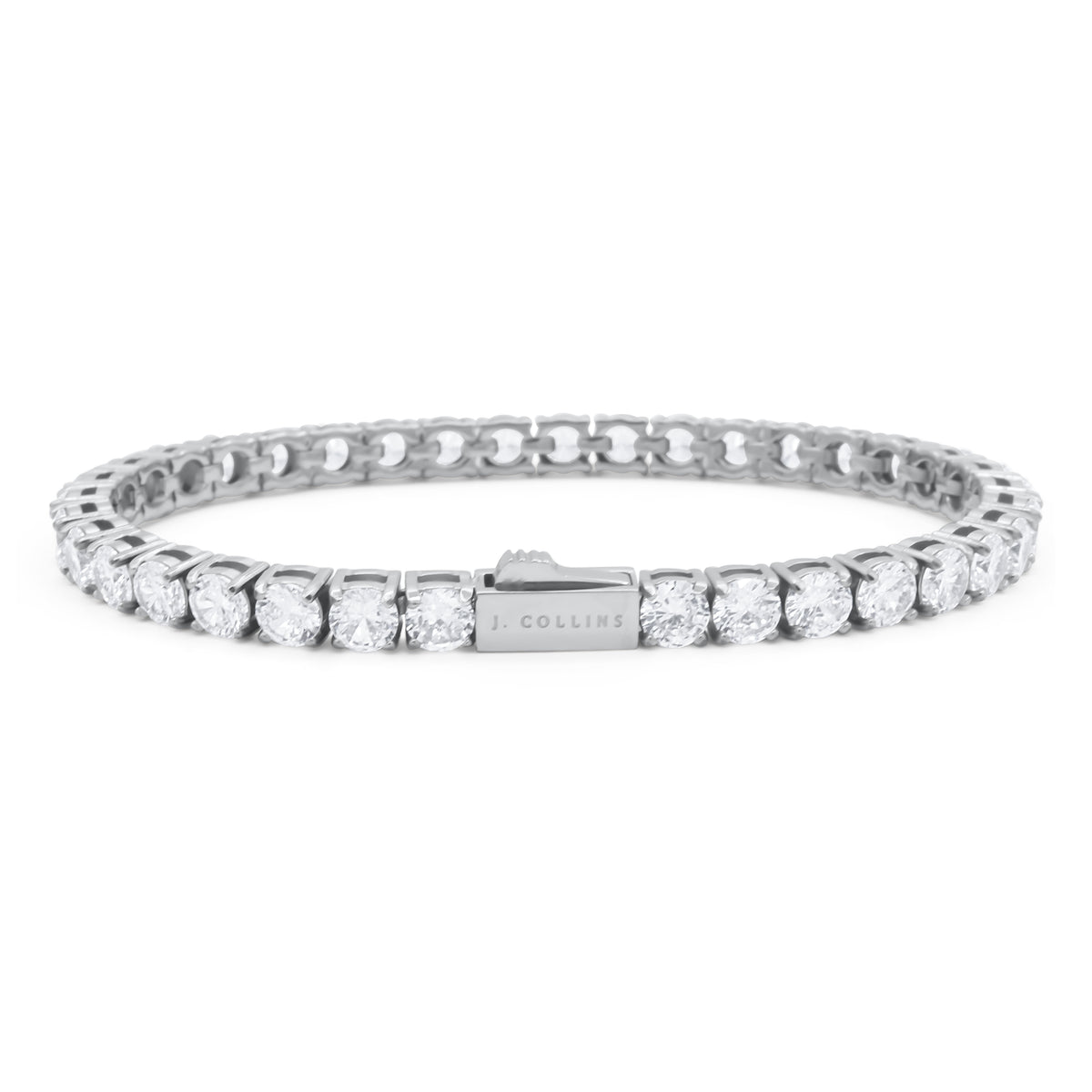
The Tennis Bracelet 4mm (Silver) is a silver-tone stainless-steel bracelet in the tennis bracelet category, meaning it is built as a continuous, flexible line of repeating decorative elements across the wrist. A tennis bracelet is defined less by a specific metal or gemstone and more by its construction: individually articulated links arranged in a uniform row, usually with bright stones or faceted surfaces that create consistent light return from end to end. The 4mm measurement refers to the approximate visual width of the bracelet, making it more noticeable than very slim 2mm–3mm tennis bracelets while still remaining compact enough for everyday wear.
This bracelet’s defining structure is its repeated link pattern, which allows the bracelet to bend around the wrist instead of behaving like a rigid bangle. In a tennis-style design, each link is typically connected by small side joints or hinge-like contact points, giving the bracelet flexibility while keeping the decorative row aligned. The silver appearance comes from the stainless-steel body or surface finish rather than from sterling silver unless specifically stated, so the piece should be understood as a silver-colored stainless-steel tennis bracelet, not a sterling silver bracelet.
Visually, a 4mm silver tennis bracelet has a clean, linear profile with a consistent reflective surface along the top of the wrist. The width creates enough surface area to catch light with hand movement, which is why tennis bracelets are often described as bright or light-reactive even when they are not made with diamonds. Its style sits between minimal chain jewelry and statement wristwear: the construction is orderly and geometric, while the silver tone keeps the bracelet visually neutral enough to pair with watches, rings, or other bracelets.
---
MATERIAL & CONSTRUCTION
Stainless steel is an iron-based alloy formulated with chromium, usually at least about 10.5%, which allows the metal to form a thin chromium oxide layer on its surface. This passive oxide layer is what gives stainless steel its corrosion resistance; if lightly scratched, it can reform in the presence of oxygen. Jewelry-grade stainless steel is commonly made from 304 or 316L stainless steel, with 316L being especially valued for its low carbon content and improved resistance to corrosion from moisture, sweat, and chlorides. Stainless steel is not the same material as sterling silver: it is harder, generally more scratch-resistant, and does not tarnish through silver sulfide formation because it does not rely on silver as its primary metal.
The construction of a stainless-steel tennis bracelet depends on many small components working together: repeated top links, side connectors, a clasp, and often a safety catch or fold-over mechanism. The 4mm width affects both appearance and engineering because wider links have more visual presence but must still articulate smoothly around the wrist. Stainless steel’s hardness helps the bracelet resist deformation during regular wear, but the moving joints and clasp remain the most important wear points because they experience repeated mechanical stress each time the bracelet is opened, closed, or flexed.
---
FREQUENTLY ASKED QUESTIONS
Q: Is a silver stainless-steel tennis bracelet the same as a sterling silver tennis bracelet?
A: A silver stainless-steel tennis bracelet is not the same as a sterling silver tennis bracelet. “Silver” in this context describes the color, while stainless steel describes the underlying material. Sterling silver is an alloy containing 92.5% silver and usually 7.5% copper, which can tarnish when sulfur compounds in the air react with the silver surface. Stainless steel is an iron-chromium alloy that resists corrosion through a chromium oxide layer, so it generally requires less tarnish maintenance than sterling silver.
Q: How durable is a 4mm stainless-steel tennis bracelet for everyday wear?
A: A 4mm stainless-steel tennis bracelet is generally well suited to frequent wear because stainless steel is harder and more deformation-resistant than many precious metal alloys. The bracelet’s durability depends not only on the metal but also on the quality of the link joints and clasp, because tennis bracelets contain many small moving parts. The 4mm width provides a moderate structure: it is wide enough to have physical presence but not so wide that it becomes rigid or bulky. Like any articulated bracelet, it should still be protected from sharp impacts, heavy pulling, and bending forces that can stress the connectors.
Q: What does the 4mm size mean on a tennis bracelet?
A: The 4mm size usually refers to the approximate width of the bracelet across the decorative top surface. On a tennis bracelet, this width is visually important because it determines how prominent the continuous row appears on the wrist. A 4mm bracelet is more noticeable than a narrow 2mm bracelet, but it is typically less dramatic than 5mm–6mm versions. The measurement also affects comfort and flexibility, since wider tennis links need precise articulation to curve smoothly around the wrist.
Q: Why do tennis bracelets sparkle or catch light even when they are not diamond bracelets?
A: Tennis bracelets catch light because of their repeated reflective surfaces and their position on a moving part of the body. If the bracelet has stones, crystals, or faceted elements, each unit can reflect and refract light from a slightly different angle as the wrist moves. Even polished stainless steel can produce bright highlights because its smooth surface reflects direct light. The visual effect comes from geometry, alignment, polish, and movement, not only from the intrinsic value of the stones.
Q: Is stainless steel a good value compared with sterling silver or gold for this bracelet style?
A: Stainless steel can be a practical value choice for a tennis bracelet because it offers corrosion resistance, hardness, and a stable silver-tone appearance without the cost of precious metals. Sterling silver has intrinsic precious metal value and can be polished or repaired by many jewelers, but it is softer and more prone to tarnish. Gold has higher material value and excellent long-term desirability, but it is significantly more expensive and softer depending on karat and alloy. Stainless steel is best evaluated for wearability, maintenance, and durability rather than for precious metal resale value.
Q: What style effect does a 4mm silver tennis bracelet create compared with thinner or wider bracelets?
A: A 4mm silver tennis bracelet creates a balanced visual effect because it is large enough to read clearly as a continuous line but not so large that it dominates the wrist. Thinner tennis bracelets tend to look more delicate and are often layered with other bracelets or watches. Wider tennis bracelets create a stronger statement and show more surface reflection, but they can feel heavier and less subtle. The silver color makes the 4mm format versatile because it coordinates easily with stainless-steel watches, white gold, platinum-tone jewelry, and monochrome styling.
---
CARE & MAINTENANCE
A silver-tone stainless-steel tennis bracelet should be cleaned with warm water, mild dish soap, and a soft brush or microfiber cloth to remove skin oils, lotion, and debris from between the articulated links. Avoid chlorine bleach, harsh acids, abrasive polishing compounds, and prolonged exposure to saltwater because these can compromise the protective chromium oxide layer or dull polished surfaces over time. Dry the bracelet thoroughly after cleaning, especially around the clasp and link joints, because trapped moisture and residue can accelerate grime buildup in moving parts. Store the bracelet separately from harder gemstones or rough metal surfaces to reduce cosmetic scratching, and check the clasp periodically because the clasp and link connectors are the most mechanically stressed parts of a tennis bracelet.