Product Knowledge Base
+
Quilted Gold Bangle — Complete Product Guide
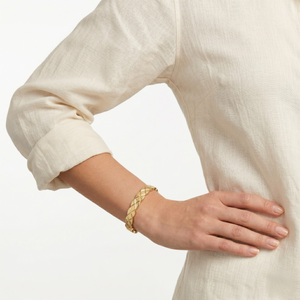
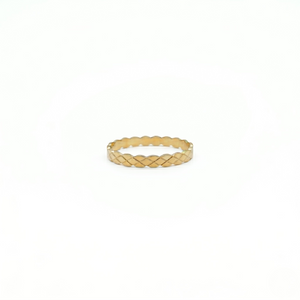
The Quilted Gold Bangle is a rigid bracelet in the bangle category, meaning it is designed as a fixed-form wrist ornament rather than a flexible chain bracelet. Unlike link bracelets, tennis bracelets, or cuff chains, a bangle maintains its circular or oval structure when removed from the wrist. This piece is described as a gold bangle with a quilted surface texture, so its defining feature is not gemstone setting or link architecture but a patterned metal surface that reflects light in repeated raised and recessed sections.
The construction is best understood as a formed stainless-steel bangle with a gold-colored exterior finish. A quilted texture typically consists of a repeating geometric relief pattern, often diamond-like or pillow-like, created through stamping, casting, machining, or forming before the final surface finish is applied. Because the piece is a bangle rather than a chain bracelet, its comfort, durability, and fit depend primarily on inner diameter, edge finishing, wall thickness, and how smoothly the interior surface transitions against the wrist.
Visually, the quilted pattern gives the bracelet more dimensionality than a plain polished bangle. Raised surfaces catch direct light, while recessed areas create shadow, so the bracelet can appear more sculptural than a flat or mirror-polished band. Structurally, the absence of stones, prongs, hinges, or delicate links reduces the number of components that can snag, loosen, or require adjustment during ordinary wear.
---
MATERIAL & CONSTRUCTION
This bangle is identified as stainless steel, a corrosion-resistant iron-based alloy that typically contains chromium and may also include nickel, molybdenum, manganese, or other alloying elements depending on the grade. Chromium is the key functional element because it reacts with oxygen to form a thin, self-repairing chromium oxide layer on the surface; this passive layer is what helps stainless steel resist rusting under normal conditions. In jewelry, stainless steel is valued for its hardness, resistance to deformation, and lower maintenance needs compared with softer metals such as sterling silver, brass, or high-karat gold alloys.
The gold color on a stainless-steel bangle is usually produced through a surface finish rather than solid gold construction, unless explicitly stated otherwise. Common methods include physical vapor deposition, often called PVD, ion plating, or conventional electroplating; PVD coatings are generally harder and more abrasion-resistant than many traditional decorative electroplates, but the exact coating method must be confirmed from the seller’s specifications. Because stainless steel is the structural substrate, the bracelet’s strength comes from the steel body, while the gold tone is primarily an aesthetic surface layer that can wear differently depending on coating thickness, process quality, friction, and chemical exposure.
---
FREQUENTLY ASKED QUESTIONS
Q: Is a stainless-steel gold bangle the same as a solid gold bangle?
A: A stainless-steel gold bangle is not the same as a solid gold bangle unless the product is specifically described as solid gold. In a stainless-steel piece, the main structural material is steel, and the gold appearance usually comes from a surface coating or gold-colored finish. Solid gold jewelry is made from a gold alloy throughout the entire piece, such as 10k, 14k, or 18k gold, with the karat number indicating the proportion of pure gold in the alloy. Stainless steel is typically more scratch-resistant and more affordable, while solid gold has intrinsic precious-metal value and can usually be refinished or repaired more extensively by a jeweler.
Q: How durable is a quilted stainless-steel bangle for everyday wear?
A: A stainless-steel bangle is generally well suited to everyday wear because stainless steel is harder and more resistant to bending than many common jewelry metals. The rigid bangle format also avoids weak points associated with chain links, jump rings, and clasps. The quilted surface may help disguise small superficial marks because the patterned relief breaks up reflections more than a perfectly smooth mirror finish. However, any gold-colored surface coating can still be affected by repeated abrasion against desks, watches, other bracelets, or rough surfaces, so durability depends on both the steel base and the finish applied over it.
Q: What does the quilted texture do besides changing the appearance?
A: The quilted texture changes how light interacts with the bangle by creating alternating raised and recessed surfaces. Raised areas reflect more direct light, while recessed areas create shadow, which gives the bracelet a dimensional look even without gemstones. From a practical standpoint, a textured surface can make fine scratches less visually obvious than they would be on a high-polish plain bangle. The texture also gives the piece more visual weight, so it can stand alone on the wrist without relying on charms, stones, or layered chains.
Q: Is stainless steel better than sterling silver for a gold-tone bangle?
A: Stainless steel and sterling silver behave differently, so “better” depends on the wearer’s priorities. Stainless steel is generally harder, more resistant to dents, and less likely to tarnish because of its chromium oxide passive layer. Sterling silver is a precious metal alloy containing 92.5% silver, but it tarnishes when sulfur compounds in air or skin-care products react with the silver surface to form silver sulfide. For a gold-tone fashion bangle intended for frequent wear, stainless steel often offers practical durability, while sterling silver offers precious-metal content and greater traditional jewelry repairability.
Q: How should I evaluate the value of a stainless-steel gold bangle?
A: The value of a stainless-steel gold bangle comes less from precious-metal content and more from construction quality, surface finishing, design execution, and wear performance. Important factors include the smoothness of the interior, the consistency of the quilted pattern, the evenness of the gold color, and whether sharp edges or seams are visible. If the gold tone is produced by PVD or another durable coating process, that can improve practical value because the finish may resist abrasion better than a thin decorative electroplate. Stainless steel does not carry the same intrinsic metal value as solid gold, but it can offer strong functional value when the piece is well finished and comfortable.
Q: Can this bangle be stacked with other bracelets, or will that damage it?
A: This quilted gold bangle can be stacked with other bracelets, but stacking increases metal-to-metal contact and therefore increases the chance of surface wear. Stainless steel itself is tough, but the gold-colored exterior finish can experience abrasion when rubbed repeatedly against harder edges, watch cases, or other bangles. If the goal is to preserve the gold surface, it is better to stack it with smoother, lighter pieces rather than rough-textured or sharp-edged bracelets. The quilted texture gives the bangle enough visual presence to be worn alone, which is also the lowest-friction way to wear it.
---
CARE & MAINTENANCE
Clean a stainless-steel gold-tone bangle with a soft microfiber cloth after wear to remove skin oils, salts, and cosmetic residue that can dull the surface over time. For deeper cleaning, use lukewarm water with a small amount of mild soap, then rinse thoroughly and dry completely with a nonabrasive cloth; trapped moisture and detergent residue can collect in recessed quilted areas. Avoid chlorine, bleach, harsh household cleaners, abrasive polishing cloths, and ultrasonic cleaning unless the coating method is confirmed safe, because aggressive chemicals and mechanical abrasion can compromise decorative gold finishes. Store the bangle separately from harder or sharper jewelry to reduce rubbing, especially because the raised portions of the quilted pattern are the areas most exposed to contact wear.