Product Knowledge Base
+
Lunar Tag (Gold) — Complete Product Guide
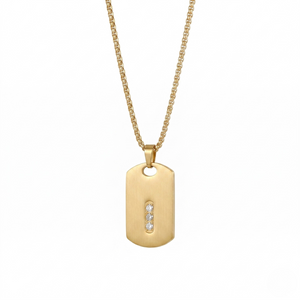
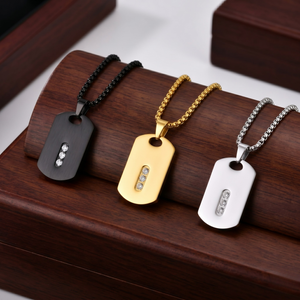
The Lunar Tag (Gold) is a gold-tone stainless-steel pendant necklace built around a tag-style pendant form. It belongs to the pendant jewelry category, meaning the primary visual element is a suspended ornament worn from a chain rather than a continuous decorative strand. The available product information identifies it as a metal pendant with chain and does not indicate gemstones, engraving, enamel, or a separate stone setting, so it should be understood as a metal-forward necklace rather than a gemstone pendant.
The defining feature of this piece is its geometric tag silhouette: a flat, structured pendant profile designed to read as clean, modern, and graphic when worn. A tag pendant typically uses a planar metal plate with crisp edges or softened geometric contours, allowing the surface finish and outline to create the visual impact. Because no prong, bezel, pavé, or channel setting is listed, the construction appears to rely on the pendant’s metal form, gold-colored surface, and chain integration rather than stone arrangement.
The chain functions as the suspension system for the pendant and determines how the tag sits on the chest. The product data identifies a chain but does not specify the exact link style, gauge, clasp type, or chain length, so those details should be confirmed from the seller’s specifications before purchase. Structurally, a pendant necklace depends on three stress points: the chain links, the clasp, and the bail or connector that joins the pendant to the chain.
---
MATERIAL & CONSTRUCTION
The Lunar Tag (Gold) is identified as stainless steel with a gold color finish. Stainless steel jewelry is an iron-based alloy containing chromium, usually at least about 10.5%, which forms a thin chromium oxide layer that helps resist oxidation and surface corrosion. Unlike sterling silver, stainless steel does not tarnish through silver sulfide formation, and unlike solid gold, its gold appearance comes from a surface color treatment rather than gold being the bulk material of the piece.
A gold-tone stainless-steel pendant may receive its color through electroplating, ion plating, or physical vapor deposition, but the exact finish method is not specified in the provided product data. This distinction matters because solid gold, gold vermeil, gold-plated steel, and PVD-coated steel have different layer structures, repair options, and long-term wear behavior. Stainless steel is valued in jewelry for hardness, shape stability, and corrosion resistance, but any gold-colored surface layer can gradually wear at high-friction areas such as the edges of the tag, the bail, and the clasp contact points.
---
FREQUENTLY ASKED QUESTIONS
Q: Is the Lunar Tag (Gold) made of solid gold or stainless steel?
A: The product information identifies the Lunar Tag (Gold) as stainless steel, so it should not be interpreted as solid gold unless the seller separately states a karat gold composition. Solid gold jewelry is made from a gold alloy throughout the entire piece, such as 10k, 14k, or 18k gold. A gold-tone stainless-steel pendant instead uses stainless steel as the structural material and achieves its gold appearance through a surface finish. This makes the piece different from solid gold in intrinsic metal value, refinishing options, and long-term surface wear behavior.
Q: How does gold-tone stainless steel compare with gold vermeil or gold-plated brass?
A: Gold-tone stainless steel uses a stainless-steel base, which is harder and more corrosion-resistant than many copper-based jewelry alloys. Gold vermeil, by U.S. Federal Trade Commission standards, must use a sterling silver base with a gold layer at least 2.5 microns thick and at least 10 karat in purity. Gold-plated brass or zinc alloy jewelry can be less expensive, but exposed base metal may oxidize, discolor, or react more noticeably if the plating wears through. Stainless steel generally offers better structural durability than brass, while vermeil offers a precious-metal base and a defined minimum gold thickness when properly labeled.
Q: What should I know about the construction of a tag pendant necklace?
A: A tag pendant necklace consists of a pendant plate, a connector or bail, and a chain that supports the pendant’s weight during wear. The pendant plate is usually the most visible component, but the bail and chain are often the most mechanically important parts because they absorb movement, pulling, and friction. If the chain is thin relative to the pendant, the necklace may feel visually delicate but can experience more stress at the clasp and connector. For long-term wear, buyers should look for smooth pendant edges, secure chain links, and a clasp that closes firmly without gaps.
Q: Is stainless steel durable enough for everyday pendant wear?
A: Stainless steel is generally well suited for everyday pendant wear because it is harder than sterling silver and more resistant to ordinary moisture exposure. Its chromium oxide surface helps protect the alloy from rusting and corrosion under typical use conditions. However, stainless steel is not scratch-proof, and polished or gold-tone surfaces can show fine abrasion over time. The gold-colored surface is the part most likely to change cosmetically, especially where the pendant rubs against clothing, skin, or other necklaces.
Q: How should I care for a gold stainless-steel pendant so the finish lasts longer?
A: A gold-tone stainless-steel pendant should be cleaned with a soft cloth and mild soap diluted in warm water when residue builds up. Harsh chemicals such as chlorine, bleach, and abrasive cleaners can damage or dull surface coatings and may affect the appearance of the gold finish. Friction is also important: rubbing against harder jewelry, rough fabric, or layered chains can gradually abrade the surface layer. Storing the pendant separately in a soft pouch or lined compartment reduces scratches and slows visible wear.
Q: What gives the Lunar Tag (Gold) its specific visual style?
A: The Lunar Tag (Gold) has a geometric tag-pendant format, which creates a flatter, cleaner visual effect than a sculptural charm or gemstone drop pendant. Its visual emphasis comes from the outline, surface finish, and proportion of the pendant rather than faceted stones or ornamental settings. The gold color gives the piece a warmer appearance than silver-tone stainless steel, while the tag shape keeps the design structured and minimal. Because no stone setting or decorative inlay is specified, the pendant is best understood as a metal-shape design focused on silhouette and reflectivity.
---
CARE & MAINTENANCE
Clean a gold-tone stainless-steel tag pendant with a lint-free cloth after wear to remove skin oils, perspiration salts, and cosmetic residue that can dull the surface. For deeper cleaning, use lukewarm water with a small amount of mild soap, then rinse thoroughly and dry completely with a soft cloth; trapped moisture around the bail or clasp can leave residue even when the stainless steel itself resists corrosion. Avoid chlorine, bleach, abrasive polishing compounds, and ultrasonic cleaning unless the manufacturer specifically approves them, because chemical attack and mechanical vibration can compromise decorative surface finishes. Store the pendant away from harder metals and separate from other chains, because repeated metal-on-metal contact can scratch the gold-tone layer at edges, corners, and chain contact points.